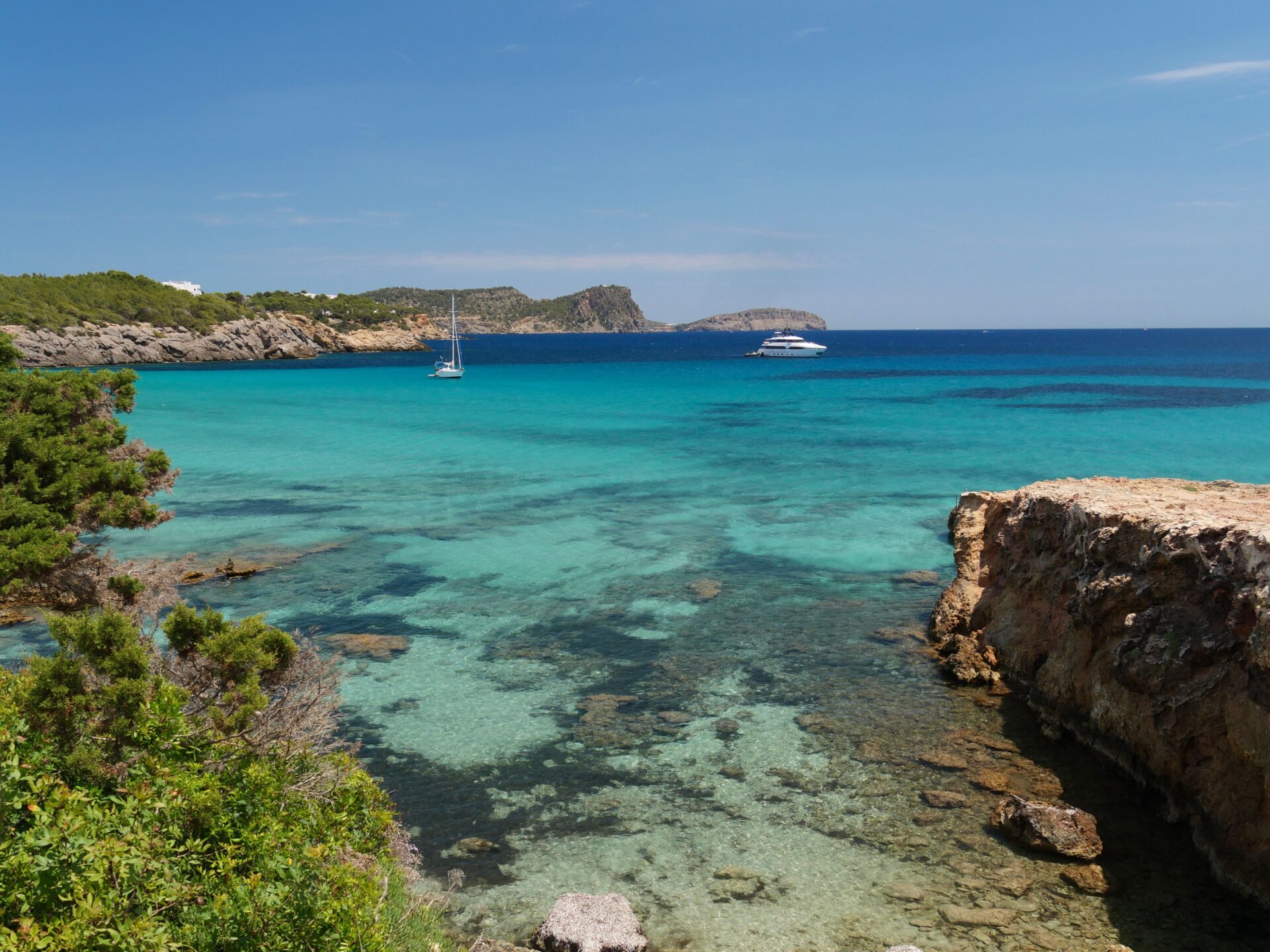
The calas Ibiza holds along its coastline are not a bonus feature of a trip to the island. They are the point. Most visitors arrive with images of packed beach clubs and famous sunsets, but the ones who leave with the strongest memories usually found their way to a quiet cove, slipped into the water, and had the whole place to themselves.
Ibiza has over 50 beaches and coves. The famous ones are worth visiting, but the lesser-known calas are where the island stops performing and starts just being itself.
What Makes the Calas of Ibiza Different from Its Famous Beaches
Popular beaches like Playa d’en Bossa or Cala Bassa have their appeal. They are well-serviced, reliably beautiful, and easy to reach. But they are also shared with hundreds of other people. The experience, while enjoyable, is predictable.
The calas are different. They tend to be smaller, harder to reach, and far less crowded. Many have no facilities at all, no sunbed rentals, no beach bars, no background music. Just water, rock, and open sky.
That contrast is what draws people back. A cala is not something you consume. It is something you sit inside of for a while and let settle.
The Geology and Nature Behind the Coves
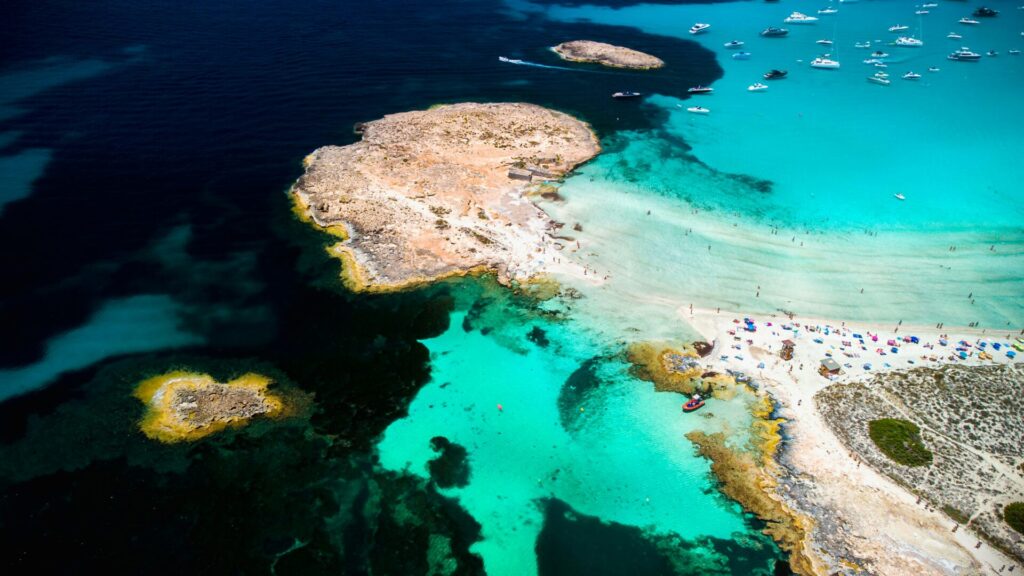
Ibiza’s coastline was shaped by millennia of erosion, leaving behind limestone cliffs, sheltered inlets, and small rocky bays. The island’s geology creates natural walls on either side of these coves. They block wind and wave action, producing the calm, transparent water the calas are known for.
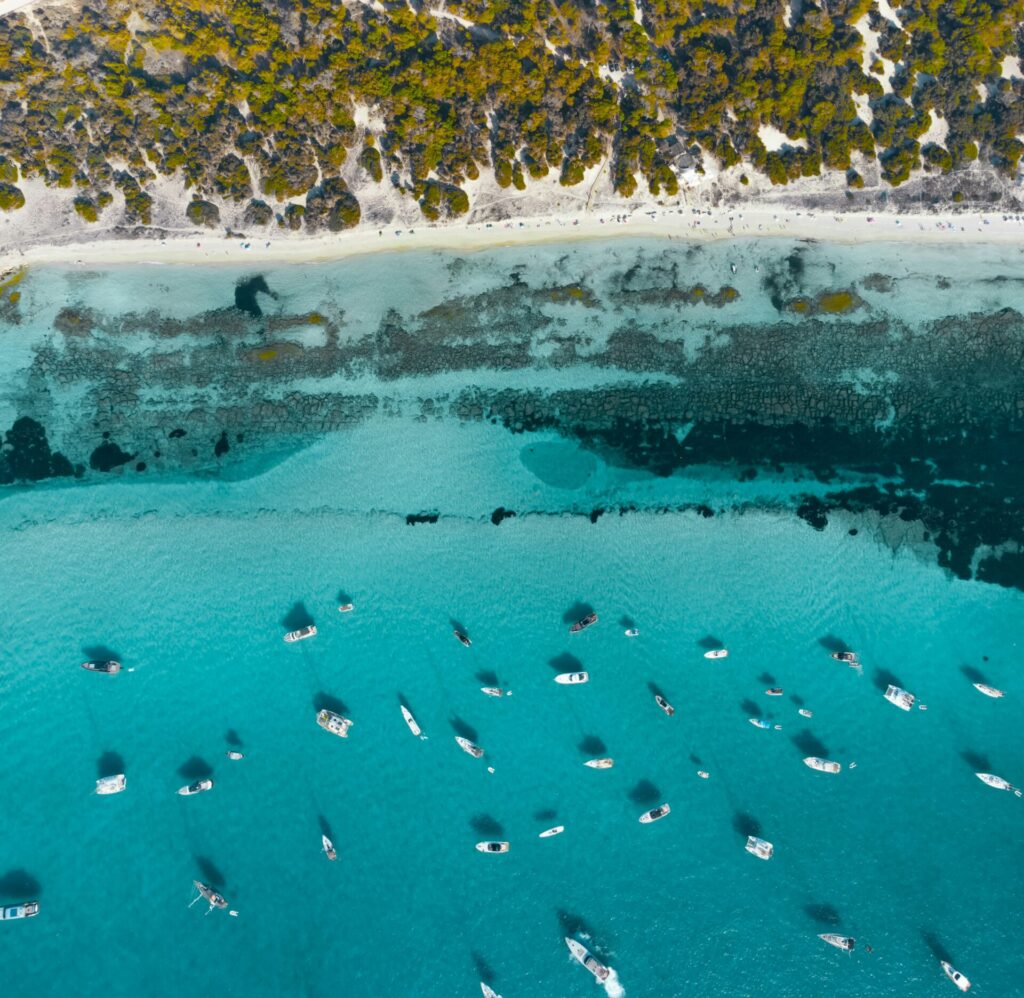
Below the surface, much of the seabed is carpeted in Posidonia oceanica. This seagrass is endemic to the Mediterranean and recognised as a UNESCO World Heritage ecosystem. It acts as a natural filter, maintaining the exceptional water clarity that makes Ibiza’s sea so visually striking.
Posidonia also supports a dense marine ecosystem, with over 400 plant species and more than 1,000 animal species associated with its meadows. That is why snorkeling in the calas of Ibiza feels like entering a genuinely alive underwater world.
The Most Remarkable Calas Ibiza Has to Offer
With so many coves across the island, narrowing them down takes local knowledge. The following are among the most rewarding for visitors looking to get off the main beaches.
Cala Mastella and the East Coast’s Quiet Charm
Cala Mastella sits on Ibiza’s east coast, about four kilometres from Sant Carles. The cove is tightly enclosed, the water is shallow near the shore, and the pace of life here has not changed much in decades.
Traditional fishing huts line the edges of the bay. A single restaurant serves fresh fish, accessed only on foot or by boat. There are no crowds, no noise, and no reason to leave in a hurry. For a relaxed morning or afternoon away from the busier parts of the island, it is difficult to beat.
Cala Xarraca and the Wild North
Cala Xarraca is located in the northwest, between Portinatx and Cala Benirrás. It is one of the most visually distinctive calas on the island, framed by reddish rock formations that contrast sharply with the turquoise water.
Snorkeling visibility here regularly reaches 20 to 30 metres on calm days. Common sightings include:
- Moray eels along the rocky reef edges
- Sea bream and starfish over the Posidonia meadows
- Occasional rays resting on the sandy seabed
There is also a natural clay deposit on one side of the cove, used informally for its skin benefits. It is one of those details that makes Cala Xarraca genuinely unlike anywhere else on the island.
Cala d’en Serra and Punta Galera
Cala d’en Serra is a horseshoe-shaped cove in the northeast, backed by low cliffs and dense pine groves. The access road is narrow and rough, but the cove is calm, shallow near the edges, and well-sheltered from wind. A small beach bar operates in season.
Punta Galera is a different experience entirely. Located near Sant Antoni, it is not a beach in the traditional sense. The shoreline is made up of smooth, flat rock platforms carved out by wave action over time. There is no sand. People come to swim, sunbathe on the rocks, and watch the light shift across the water in the late afternoon. Both are worth building a half-day around.
Cala Salada and Cala Saladeta
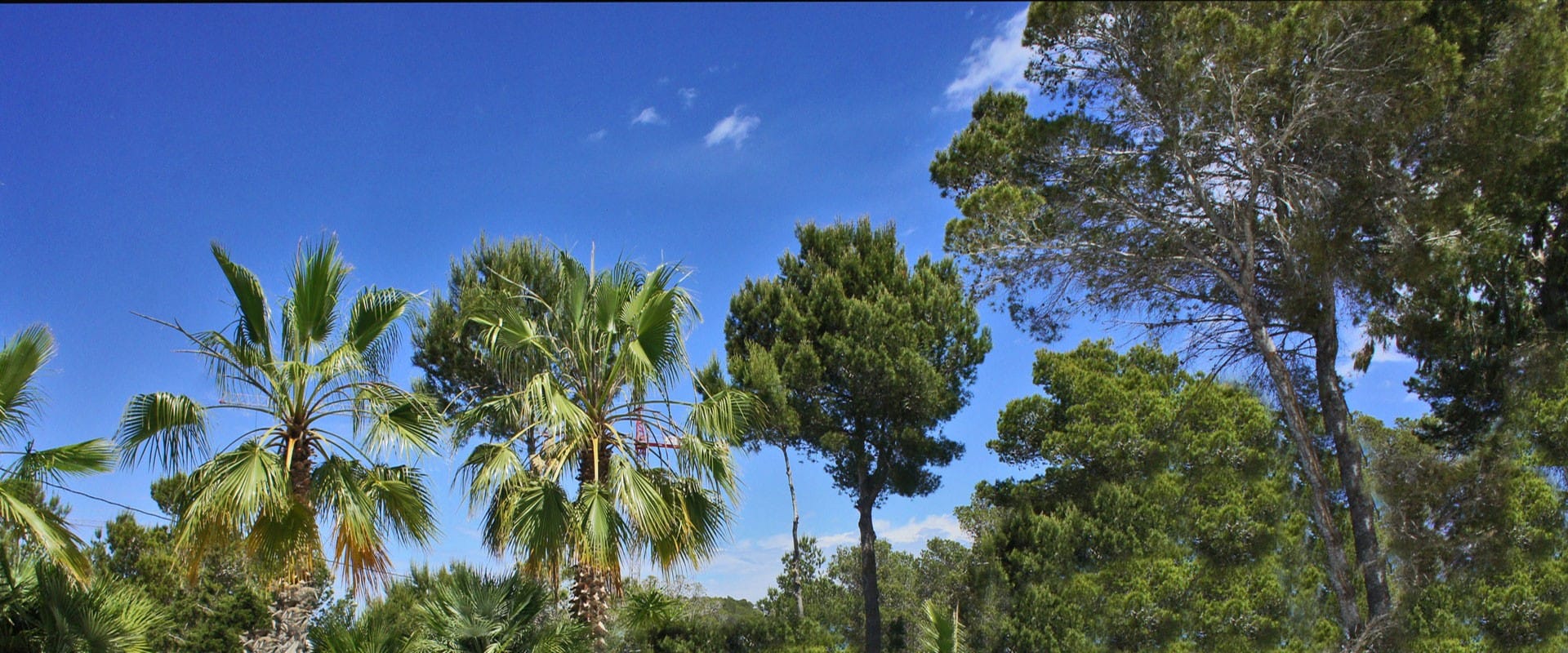
These two coves sit side by side just a short drive from Sant Antoni, separated by a rocky headland. Cala Salada is the larger of the two, with turquoise water, pine-covered cliffs, and traditional fishing huts along the edge. Cala Saladeta, reached by a short trail, is smaller and consistently quieter.
The underwater scenery between the two coves is excellent for snorkeling. Rock formations shelter octopuses and starfish, while deeper sections can produce sightings of barracuda and cuttlefish. The Posidonia meadows here are extensive and healthy.
Tip: Arrive early. The access road fills up quickly in summer.
Atlantis and the Southwest’s Hidden Gems
Atlantis, officially known as Sa Pedrera de Cala d’Hort, is the cove that best embodies what “hidden” really means. It sits in the southwest, near the end of the road to Es Cubells. Getting there requires a 30-minute descent down a sandy cliff path with no markings and no facilities at the bottom.
What you find is a former sandstone quarry reclaimed by the sea. Natural pools, carved rock formations, and unobstructed views of Es Vedrà rising from the water. It is unlike anywhere else on the island. It ranks among the most dramatic of Ibiza’s secret beaches, and it remains one of the few visitors ever find.
Also in the southwest, Cala Llentrisca is accessible only by boat or a demanding coastal hike. Cala Moli, slightly more reachable, offers rocky shorelines and calm, clear water within a genuinely quiet bay.
How to Reach the Calas Ibiza Visitors Often Miss

Most of the lesser-known calas require some effort. That is part of what keeps them unspoiled. By land, access typically involves a dirt track followed on foot, sometimes over uneven or steep ground.
Before heading out, keep these basics in mind:
- Wear proper footwear. Rocky paths and cove entries make sandals a poor choice.
- Bring water. Many calas have no services at all.
- Go early or late. Morning arrivals and late afternoons mean cooler temperatures and fewer people.
Accessing Calas by Boat
Renting a private boat is the most effective way to reach the calas Ibiza keeps to itself. Several of the most beautiful coves are either inaccessible by land or genuinely difficult to reach on foot.
By boat, you can anchor offshore, swim in, and move on to the next cove when ready. A full day on the water covers far more ground than road-based exploration. The cliffs, cave entrances, and colour gradients above different seabeds are only visible from the water.
What to Know Before Visiting Ibiza’s Protected Calas
Posidonia meadows are protected by law in the Balearic Islands. Boats are prohibited from anchoring where the seagrass is present. Access by sea to some coves is also restricted during peak season. Posidonia grows exceptionally slowly and takes decades to recover from physical damage.
On land, the rules are straightforward:
- Take nothing, leave nothing
- Stick to marked paths where they exist
- Avoid cliff nesting areas, particularly in spring
The calas that feel wild and untouched today are that way because enough people have treated them with care. That is worth maintaining.
Staying Near the Calas Ibiza: Choosing the Right Villa Location
Where you stay on the island shapes which calas you can realistically visit. Villa location matters more than most travellers realise when planning a cove-focused stay.
- Sant Josep puts the southwest coast within easy reach: Cala Moli, Atlantis, and the coves around Cala d’Hort.
- Sant Joan or Sant Carles opens up the wilder north and east: Cala Xarraca, Cala Mastella, and Cala d’en Serra.
At Ibiza Selected, the team has been based on the island since 2005. They advise guests on villa selection with exactly this kind of local knowledge, matching properties not just to size and budget but to the coastline experience each guest is after.
Villas with Direct or Near-Access to the Island’s Best Coves
Several villas in the Ibiza Selected portfolio sit within minutes of the island’s most beautiful calas. Some have direct sea access or elevated positions with views over the water. The concierge service can also arrange private boat charters, making even the most remote coves part of any itinerary without the logistics getting in the way.
Conclusion
The calas ibiza offers along its pine-edged coast are not a side note to a week on the island. They are what most visitors remember longest: the quiet, the clarity of the water, the sense of having found something still genuinely undiscovered. If you want to experience that side of the island properly, start with where you choose to stay.
Frequently Asked Questions (FAQs)
1. What does “cala” mean in Ibiza?
Cala is the Spanish and Catalan word for a small, sheltered bay or cove. In Ibiza, it refers to the natural rocky inlets along the coast that are far less developed than the main beaches.
2. Are the hidden calas in Ibiza safe to swim in?
Yes. Most calas are naturally sheltered with calm, clear water. Some have rocky entries, so water shoes are a good idea for more remote spots.
3. Can you visit calas in Ibiza by boat?
Yes, and it is one of the best ways to reach them. A private boat or charter gives access to coves that are difficult or impossible to reach by land.
4. Which area of Ibiza has the best calas?
It depends on what you are after. The north offers wild, dramatic coves like Cala Xarraca. The southwest has secretive spots like Atlantis. The east coast has calmer, more characterful coves like Cala Mastella.
5. When is the best time to visit the hidden calas in Ibiza?
June, September, and October offer calm water and fewer crowds. In July and August, arriving before 10am or after 5pm still gives a peaceful experience at most calas.